Students from Gitanmaax in northwestern B.C. made their way over to Sammie Hanson at a national Indigenous gathering in Halifax this spring.
Hanson had visited their school months earlier as part of her work as TRU’s Qelmúcw (Indigenous) future students advisor. Now, more than 5,000 kilometres from home at Soaring, Indspire’s Indigenous youth empowerment event, they recognized one another immediately. Hanson even remembered the post-secondary programs some of the students were interested in.
Weeks later, at another event in Chilliwack, more students recognized her. This time they remembered meeting her at Soaring — and remembered Thom, the teddy bear that travels with Hanson to all her recruitment events.
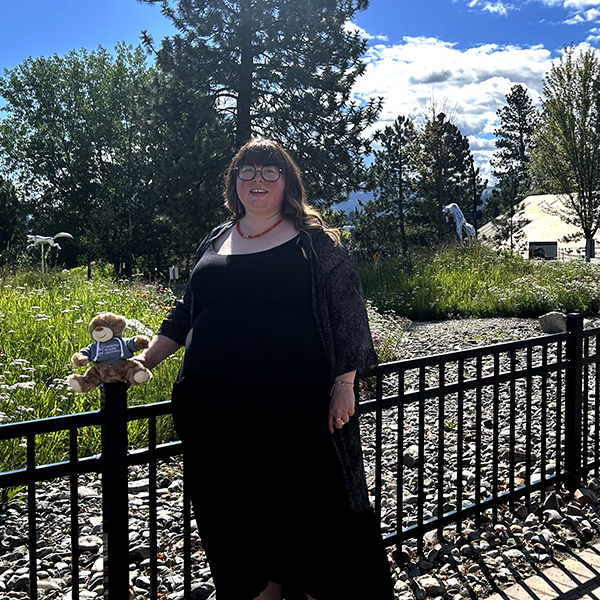
Qelmúcw future students advisor Sammie Hanson takes her recruitment bear Thom everywhere she goes. In the background at right, TRU’s new Indigenous Centre under construction.
For Hanson, moments like that are what Indigenous student recruitment is really about.
“It’s so much more than a single interaction. It’s about building relationships and earning trust, not only with the student, but also with their family and support network,” she said. “My goal is to be part of their support system.”
Born and raised in Kamloops on the ancestral lands of the Tk’emlúps te Secwépemc, Hanson is Métis on her mother’s side, with family roots in Duck Lake and Batoche, Saskatchewan. She first came to TRU as a student, graduating with a Bachelor of Arts in 2017, and that experience has shaped the way she advises students today.
“My first couple of years, I didn’t really know about the supports and services that were available, so I was trying to figure everything out on my own.”
Everything changed in her third year, when she found a stronger sense of community as an Indigenous mentor at Cplul’kw’ten, the Gathering Place on campus.
“I know what it’s like to struggle a bit, and how much of a difference the right support can make,” she said. “Because of that, I always try to connect students with the resources they’ll need, even if they don’t think they’ll use them right away. I’d rather they know those supports are there before they need them, than have to discover them later like I did.”
From student to mentor
After graduating from TRU, Hanson saw an opportunity to make a positive difference as an Indigenous education worker with School District 73. She wanted to be “a safe, trusted person” youth could turn to. Three years ago, when her mother spotted the posting for TRU’s Qelmúcw future students advisor, Hanson wasn’t convinced she was qualified, but she took the leap.
Today, she strives to be that same trusted person for every Indigenous student and family she meets.
“What I hope Indigenous students and their families take away from that first conversation with me is that I am a safe and consistent point of contact for them throughout their education journey. My role is to walk alongside them and connect them with the right people and resources when needed, so they never feel like they are navigating it alone.”
Meeting students where they are
That same philosophy extends beyond TRU through Strengthening Connections, a provincial Indigenous recruitment collaborative that Hanson has helped revitalize and expand since taking on the role of chair in fall of 2024. It brings together post-secondary institutions and employment partners to meet Indigenous students in their own communities, across BC and into the Yukon and Northwest Territories.
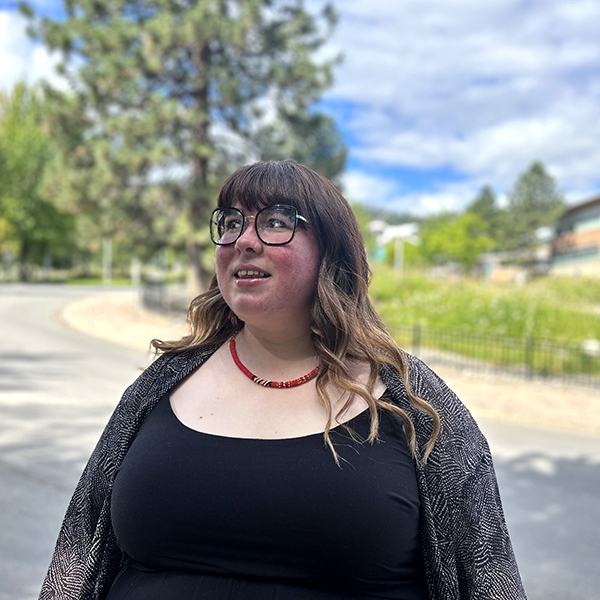
Hanson also chairs Strengthening Connections, the provincial collaborative bringing post-secondary recruiters and employers to Indigenous students in their home communities.
“Strengthening Connections is a passion project for me,” she said.
“Just the thought of promoting post-secondary education to Indigenous students, no matter where they’re from or what their learning journey has looked like, fills my heart. By meeting students where they are, we’re able to show them what’s possible and see the opportunities that post-secondary education can open up.”
Her success has attracted attention from other provinces. The Post-secondary Indigenous Recruitment Association of Alberta began using templates Hanson created, and then reached out to collaborate on recruitment trips. Saskatchewan has also been in touch.
“I am flabbergasted other provinces’ Indigenous recruitment teams have reached out about what I do. I think the approach is resonating because we’re able to reach so many different students and communities across the province and beyond.”
The recognition that matters most, however, is from students like the group from Gitanmaax.
“I’ve seen students I first talked to in Grade 10, that I get to connect with each year when I visit their school, right through to them booking appointments with me to talk about their final plans before graduation. Some Indigenous students don’t think that post-secondary is possible for them, but after explaining how TRU works and that they can attend, seeing the happiness on their face makes my day.”
Asked what she would tell every Indigenous student considering post-secondary, Hanson doesn’t hesitate.
“You don’t have to figure it out on your own. There are people and supports ready to help you along the way, even if you’re not sure where to start.”