Visitors to Thompson Rivers University now have a new way to experience campus while learning about the land, language and culture that have shaped it for generations.
The Coyote Project: Self-Guided Campus Tour invites students, employees, visitors and community members to explore TRU at their own pace while discovering Indigenous artwork, plants, landmarks and stories connected to Secwépemc territory.
Accessible on a mobile device or computer, the tour features an interactive map that allows participants to select points of interest across the TRU campus. Along the way, they can explore Indigenous artwork, landmarks, native plants and other features while learning about their cultural significance, listening to Secwepemctsín audio clips and discovering connections to Tk̓emlúps te Secwépemc. Participants can choose their own route and explore at their own pace.
“This tour invites people to see our campus through a Secwépemc lens,” said Alexis Gottfriedson, S7extekékstmen, Office of Vice President of Research. “As they learn about the language, stsptekwll and relationship to the land, we hope they also reflect on their own relationship to this place and recognize that learning carries responsibilities. Reconciliation begins with understanding, respect and a willingness to keep learning.”
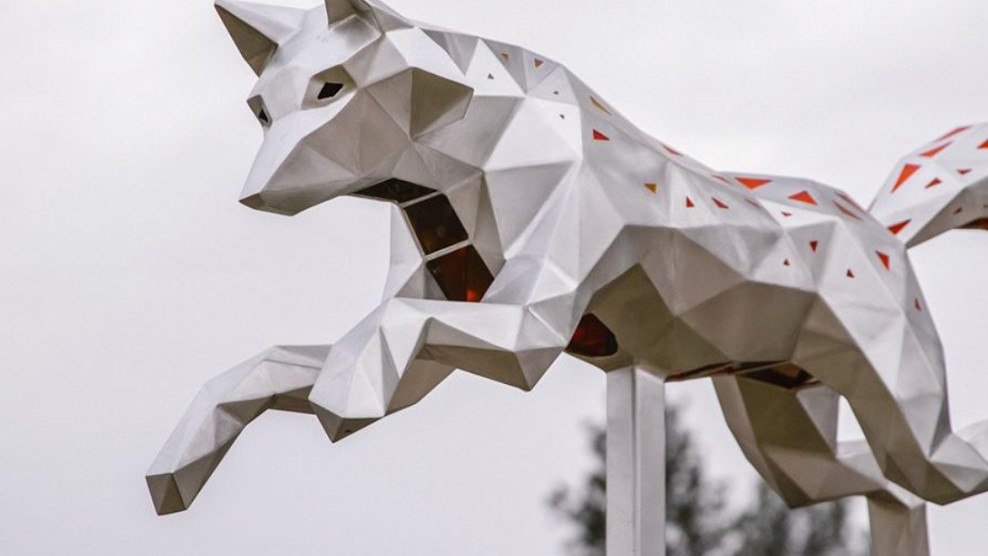
A new art installation features four fox sculptures inspired by a traditional Secwépemc legend, “Secwépemc Stsptekwl”. The sculptures highlight the importance of storytelling in passing down Indigenous culture and knowledge.
Developed through a collaborative student research project, the tour combines Indigenous knowledge, language and place-based learning to encourage reflection and deepen understanding of the relationship between the university and the Tk̓emlúps te Secwépemc.
More than a campus map
The project was funded through TRU’s Coyote Project initiative, which supports student-led research and experiential learning opportunities. Originally envisioned as a resource for visitors attending a conference at TRU, the idea quickly grew into a lasting educational resource that supports truth and reconciliation by encouraging ongoing learning for students, employees, visitors and the wider community.
“We wanted to create more than a map of campus,” said Leanne Mihalicz, co-operative education coordinator in the Department of Computing Science, Physics and Mathematics. “We wanted an experience that encourages people to slow down, look more closely at where they are and learn from the stories that have always been here.”
To bring that vision to life, Mihalicz hired Eboni Samaha, a first-year Natural Resource Management student and member of the Cooks Ferry Indian Band in the Nlaka’pamux Nation, as the project’s student research assistant.
“One of the most rewarding parts of this project was watching Eboni take ownership of it,” said Mihalicz. “She brought curiosity, creativity and respect to every stage of the work, and the result is something our campus community can continue learning from for years to come.”
Making knowledge accessible

Eboni Samaha, a first-year Natural Resource Management student and member of the Cooks Ferry Indian Band in the Nlaka’pamux Nation, was the project’s student research assistant.
Over several months, Samaha worked closely with Indigenous staff, Knowledge Holders and Elders to research stories, artwork, plants and animals, and help shape the online tour into a rich educational resource. She also helped design and develop the tour’s webpages, creating an accessible experience for users on mobile devices, tablets and computers.
“This project gave me the opportunity to learn from Indigenous staff and Knowledge Holders while exploring the language, artwork and stories connected to this territory,” said Samaha. “It strengthened my understanding of Indigenous cultures, helped me build meaningful relationships and showed me how research can make knowledge accessible for others.”
Throughout the project, she sought feedback to ensure the content was accurate, respectful and reflective of local knowledge and perspectives. For Samaha, the project became a hands-on learning experience that extended well beyond the classroom.
“Working on this project helped me grow academically, personally and professionally,” said Samaha. “I learned more about my own culture, developed new skills and built connections that I know will benefit me in the future.”
Discovering stories, language and living connections
Alexis Gottfriedson, a member of Tk̓emlúps te Secwépemc, played a foundational role in the project by sharing knowledge of Secwepemctsín, the land and culture. Her guidance helped ensure the tour authentically reflects the language, culture and perspectives of Secwépemc territory.
The project also reflects TRU’s commitment to advancing Indigenous education and reconciliation by creating learning opportunities beyond the classroom. By encouraging participants to engage with Secwépemc language, culture and history while exploring campus, the tour promotes ongoing learning, reflection and respect for the land and its original caretakers.
The team hopes to continue expanding the tour in the future, incorporating additional stories, perspectives and opportunities for reflection that encourage participants to consider not only what they are learning, but how they can care for the land and strengthen relationships with Indigenous communities.
The Coyote Project: Self-Guided Campus Tour is available online at truindigenoustour.trubox.ca. Whether visiting campus for the first time or seeing it from a new perspective, participants are invited to discover the stories, language and living connections that continue to shape this land and the TRU community.