
A Thompson Rivers University computing science researcher and recent computing science graduate developed an experimental prototype system that explores how wireless sensors and artificial intelligence could help detect wildfires earlier in remote areas — a growing concern in B.C. and around the world.
Dr. Anthony Aighobahi, an assistant teaching professor in TRU’s Department of Computing Science, is continuing work on a project that combines wireless sensors, environmental monitoring and artificial intelligence to investigate how emerging technologies might be applied to wildfire detection challenges.
Working alongside him was Fernando Cerna, who recently graduated from TRU’s computing science program and helped build and test much of the prototype system.
The goal of the project was to create a network of small sensors that can be placed in forested areas to monitor environmental conditions such as temperature, humidity and air quality. The sensors were designed to send data through a wireless communication network that allows information to travel long distances, even in locations with limited connectivity.

Computing science alum Fernando Cerna (left) and faculty member Dr. Anthony Aighobahi collaborated on development and testing of an experimental prototype system that explored how wireless sensors and AI could be applied to wildfire detection challenges.
Artificial intelligence was then used to analyze the data to determine whether conditions resemble those associated with wildfire activity.
The project is an example of use-inspired undergraduate research, giving students an opportunity to explore new ideas and apply classroom learning to real-world challenges.
“In simple terms, AI adds an intelligent decision layer to the system,” said Aighobahi. “Instead of only collecting raw sensor data, the model looks at patterns in that information and helps predict whether fire conditions may be present.”
The research responds to a growing need for earlier wildfire detection. Fires can spread quickly before they are noticed, especially in remote regions where traditional monitoring methods may be limited.
“Wildfires are becoming more frequent and more destructive,” said Aighobahi. “This project is an opportunity to explore how AI and sensor networks might contribute to monitoring efforts in the future.”
Use-inspired research creates learning opportunities
The project also provided a significant experiential learning opportunity for students.
Cerna was closely involved in designing and developing the prototype system, including the wireless sensor network and the software used to analyze environmental data.
“I’ve been working on building the system and developing the software that analyzes the environmental data,” he said. “The project involves a lot of testing, troubleshooting and improving the design as we learn what works best.”
For Cerna, the project stood out because it connected classroom learning with an issue that affects communities across the province.
“Wildfires are a major issue in B.C., so working on technology that could potentially contribute to early detection has been very motivating,” he said.
From concept to prototype
Funding from the Undergraduate Research Experience Award Program (UREAP) helped move the project beyond a simple concept toward a more realistic prototype. The support allowed the purchase of sensor hardware, communication modules and other equipment needed to build and test the system.
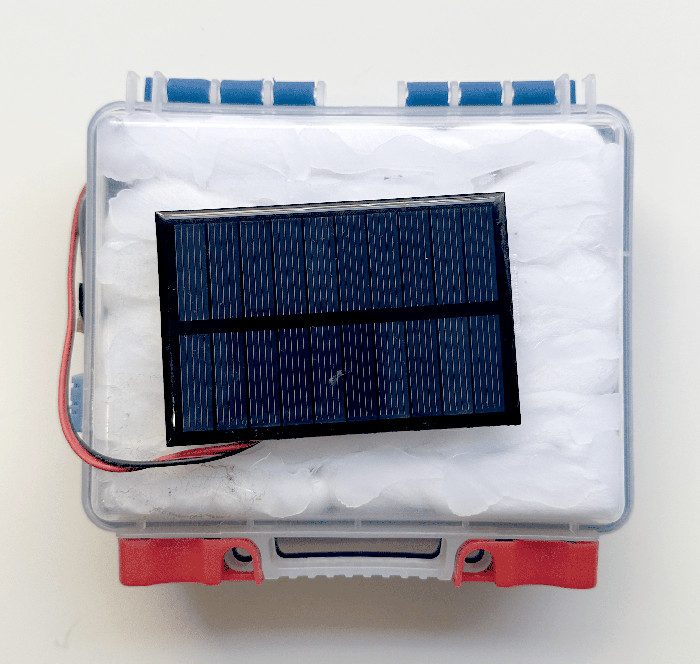
The experimental prototype combines wireless sensors, environmental monitoring technology and AI to explore new approaches to early wildfire detection.
The prototype has not been tested in active wildfire environments and remains in the early stages of development.
Pending future funding opportunities, Aighobahi hopes to continue developing the project by refining the communication network and improving the AI model so it can make more reliable predictions in real outdoor environments.
“What excites me most is the possibility of turning this into a practical early warning system,” said Aighobahi. “The goal is to make the prediction side smarter and more reliable so it could eventually support real wildfire monitoring.”
Through the project, Cerna gained experience with wireless communication, environmental monitoring, sensor networks and applied machine learning.
“Projects like this help you see how research moves from an idea to a working prototype,” he said. “It’s a chance to develop practical problem-solving skills that are useful well beyond the classroom and shows how computing science research can contribute to solutions for challenges such as wildfire detection.”